1 job for "Abstract Writing"
Sort by
1 job for "Abstract Writing"
Date posted
March 2, 2026
Closing date
August 29, 2026
Hiring location
Beijing
Offered salary
Negotiable
Career level
Middle
Qualification
Doctorate Degree
We are seeking outstanding early-career and established faculty candidates in various fields of environmental studies, with a particular focus on the following areas:
Faculty Positions
Open Position 1
Regional Water Pollution Control
Research focuses on the identification and transformation of priority pollutants in regional water environments, as well as the development of innovative water pollution control theories and technologies aimed at the synergistic prevention of pollution and ecological risks.
Open Position 2
Interactions and Regulation of Water Quality and Aquatic Ecology
Research areas include the response of watershed-scale water environments and aquatic ecosystems to global climate change and anthropogenic activities; the impact of water quality changes on aquatic ecological systems and corresponding regulatory principles; ecotoxicological effects and ecological risk assessment related to exposure to complex micropollutants; and the health risk management and regulation of aquatic ecosystems under diverse environmental stressors.
Open Position 3
Drinking Water Safety and Health Risk Control
Research focuses on methods for evaluating the synergistic toxic effects of complex pollutants in drinking water; innovative technologies for the removal of micropollutants; and the principles and technologies for drinking water purification and health risk control to meet regulatory standards and mitigate toxic effects.
Open Position 4
Construction and Operation of Sustainable Urban Water Infrastructure
Research centers on the development and management of sustainable urban water systems, including low-carbon water and wastewater treatment technologies, efficient collection and distribution systems, integration of treatment plants and networks, and infrastructure safety management.
Open Position 5
Green Environmental Materials for Long-Term Remediation of Contaminated Soil and Groundwater
Research focuses on the design, synthesis, modification, and characterization of remediation materials; the development of green and sustainable materials for long-term immobilization of heavy metals in soil; and methods for evaluating the long-term effectiveness of remediation strategies. Emphasis is placed on innovative outcomes with practical applications.
Open Position 6
Interface Mass-Transfer Process Simulation for Soil and Groundwater Contamination
Research aims to develop theories and technologies for modeling mass-transfer processes at contaminant interfaces in the vadose zone and groundwater aquifers. Modeling approaches will be applied to study a range of contamination and remediation scenarios, with expectations for significant contributions to both mechanistic understanding and dynamic simulation.
Open Position 7
Simulation and Cooperative Control of Multi-Type, Cross-Media Environmental Contamination in Soil and Groundwater
Research focuses on theories and technologies for simulating and managing cross-media pollution from multiple sources and contaminants. Field-scale demonstrations leveraging large environmental simulation facilities are encouraged. Innovative progress in regional-scale process analysis and cooperative governance systems is anticipated.
Open Position 8
Interactions and Coordinated Controls of Air Pollution and Climate Change
Research areas include chemical processes, formation mechanisms, and source apportionment of complex air pollution; physicochemical processes governing aerosol–cloud–radiation interactions; numerical modeling of air pollutant formation and evolution; and principles for the coordinated control of air pollution and climate change.
Open Position 9
Health-Impact Assessment and Risk Control of Air Pollution
Research focuses on the influence of aerosol physical and chemical properties on health outcomes; health effects of ultrafine particles; atmospheric chemical transformations of pollutants under complex air pollution scenarios; and trans-media, trans-regional, and trans-sectoral pollutant transport and conversion, along with related health risk assessment and control policies.
Open Position 10
Organic Solid Waste Management and Urban Mining
Research explores innovative theories and technologies for material metabolism in the low-carbon conversion of organic solid waste and the recycling of urban waste. The goal is to provide scientific and decision-making support for advancing urban mining, circular economy, and eco-industrial development in China.
Open Position 11
Informatics and Prediction for Environmental Microbiology
This position aims to establish a multidisciplinary research platform employing advanced bioinformatics tools to study and predict the ecological and functional evolution of environmental microorganisms and their implications for pollution control and ecological safety.
Open Position 12
Analytical Methods and Pollution Characteristics of Emerging Contaminants in Multiple Environmental Media
Research focuses on developing analytical techniques and rapid screening tools for emerging contaminants—such as persistent organic pollutants, pharmaceuticals and personal care products, nanomaterials, and microplastics—across environmental and biological matrices. Studies should clarify their concentrations, occurrence states, transformation pathways, and fate in regional environments.
Open Position 13
Bacterial Pathogens and Environmental Health
Research integrates epidemiological methods, genetic analysis, and mathematical modeling to investigate the sources, transmission mechanisms, and control strategies of human pathogens in the environment.
Open Position 14
Big Data and Environmental System Modeling
Research leverages big data to explore multi-system coupling mechanisms, with applications in urban energy systems, watershed water systems, and industrial adaptation systems. Emphasis is placed on theories and methods for computable environmental analysis.
Open Position 15
Simulation and Reconstruction of Watershed Systems
Research focuses on developing and applying integrated cross-system models to support collaborative environmental governance decisions at urban, regional, global, and key industrial scales.
Postdoctoral Positions: Shuimu Tsinghua Scholar
Tsinghua University has established the Shuimu Tsinghua Scholar Program to support recent doctoral graduates in advancing their academic careers and becoming future leaders in their fields.
Scholars receive an annual salary of RMB 300,000 (pre-tax) for two years, along with on-campus transitional housing or an annual housing subsidy of RMB 42,000. Additional benefits include a state-funded housing subsidy of RMB 12,000 per year, property management and heating subsidies, and access to the same medical plan as Tsinghua faculty. Scholars’ children are eligible for placement in Tsinghua’s affiliated kindergarten and primary school. Participants may also attend faculty career development courses and apply for funding to attend top-tier international conferences.
Requirements for Applicants
Candidates should demonstrate integrity, diligence, and good health, along with the ability to conduct cutting-edge research and work collaboratively.
Compensation and Benefits
The School of Environment offers a comprehensive benefits package, including:
How to Apply
Interested candidates should submit a cover letter, detailed CV, representative academic achievements, and a research proposal to:
This call for applications will remain open until all positions are filled.
For more information, please visit: https://www.tsinghua.edu.cn/env
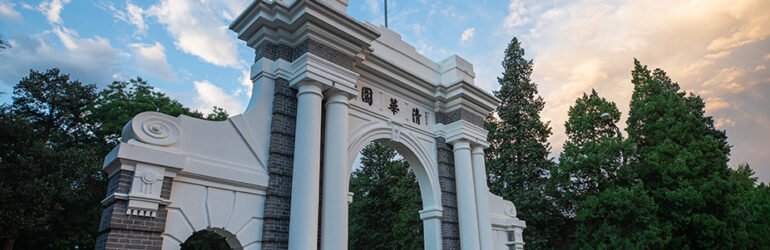
The campus of Tsinghua University is situated in northwest Beijing on the site of the former imperial gardens of the Qing Dynasty, and surrounded by a number of historical sites.
Tsinghua University was established in 1911, originally under the name “Tsing Hua Imperial College”. The school was renamed "Tsing Hua College" in 1912. The university section was founded in 1925. The name “National Tsing Hua University” was adopted in 1928.
The faculty greatly valued the interaction between Chinese and Western cultures, the sciences and humanities, the ancient and modern. Tsinghua scholars Wang Guowei, Liang Qichao, Chen Yinque and Zhao Yuanren, renowned as the "Four Tutors" in the Institute of Chinese Classics, advocated this belief and had a profound impact on Tsinghua's later development.
Following the outbreak of the War of Resistance against Japanese Aggression in 1937, National Tsing Hua University, National Peking University and Nankai University merged to form Lin-shih-ta-hsueh, which was renamed the National South-West Associated University in 1938 after moving to Kunming. In 1946 The University was moved back to its original location in Beijing after the war.
After the founding of the People's Republic of China, the University was molded into a polytechnic institute focusing on engineering in the nationwide restructuring of universities and colleges undertaken in 1952. In November 1952, Mr. Jiang Nanxiang became the President of the University. He made significant contributions in leading Tsinghua to become the national center for training engineers and scientists with both professional proficiency and personal integrity.
Since China opened up to the world in 1978, Tsinghua University has developed at a breathtaking pace into a comprehensive research university. At present, the university has 22 schools and 59 departments with faculties in science, engineering, humanities, law, medicine, history, philosophy, economics, management, education and art.
With the motto of “Self-discipline and Social Commitment” and the spirit of “Actions Speak Louder Than Words”, Tsinghua University is dedicated to the well-being of Chinese society and to world development. As one of China’s most prestigious and influential universities, Tsinghua is committed to cultivating global citizens who will thrive in today’s world and become tomorrow’s leaders. Through the pursuit of education and research at the highest level of excellence, Tsinghua is developing innovative solutions that will help solve pressing problems in China and the world.
Tsinghua University launched its global strategy in 2016. Guided by this strategy, Tsinghua aims to foster innovative talents with global competence, serve China and the world through research, and strengthen its institutional competitiveness and global impact.
Since the formation of the global strategy, Tsinghua has established new global institutions dedicated to promoting international collaboration and providing students, faculty and staff with overseas opportunities to study, research and undertake internships.
Tsinghua University also initiated four University alliances, including the China-UK Humanities Alliance for Higher Education, Asian Universities Alliance (AUA), Global Alliance of Universities on Climate (GAUC), and Global MOOC and Online Education Alliance.
In 2021, Tsinghua University formulated its Global Strategy 2030, in order to enhance its level of international exchange and cooperation to higher standards, and contribute to building a community with a shared future for mankind.
Read moreCategories
Company size
Founded in
1911
Location
Beijing
Phone
154 days left to apply